
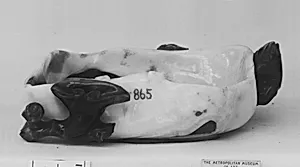
Dish
Unknown Artist
18th century
Medium
Carnelian and white agate
Dimensions
H. 1 5/8 in. (4.1 cm); W. 5 1/4 in. (13.3 cm); D. 4 1/4 in. (10.8 cm)
Classification
Hardstone
Culture
China
Department
Asian Art
Museum
Metropolitan Museum of Art, New York, NY
Credit
Gift of Heber R. Bishop, 1902
Accession Number
02.18.865
Rights
Public Domain
Art Historical Context
This exquisite 18th-century Chinese dish crafted from carnelian and white ag, showcases the masterful hardstone carving techniques of imperial workshops during the Qing dynasty. Measuring just 1⅝ inches high, 5¼ inches wide, and 4¼ inches deep, its petite oval form belies the monumental skill required to shape and inlay these durable semiprecious stones. The vibrant red-orange carnelian contrasts beautifully against the creamy white agate, creating luminous, jewel-like effect that highlights the lapidary's precision in polishing and fitting the materials without visible seams. In Chinese culture, hardstone vessels like this were symbols of refinement and prosperity, often used by scholars and elites to hold precious inks, seals, or confections. The 18th century marked a peak in such luxury arts, where artisans employed diamond-tipped tools to carve intricate designs, emphasizing the stones' natural translucency and veining. This dish exemplifies the era's fascination with mineral beauty, blending functionality with aesthetic splendor. A generous gift to the Metropolitan Museum of Art from collector Heber R. Bishop in 1902, it joins a renowned collection of Asian hardstones, inviting visitors to appreciate the enduring legacy of Chinese craftsmanship that prized harmony between material and form.