
Dish
Unknown Artist
18th century
Medium
Carnelian and white agate
Dimensions
H. 3 3/8 in. (8.6 cm); W. 7 3/4 in. (19.7 cm); D. 5 in. (12.7 cm)
Classification
Hardstone
Culture
China
Department
Asian Art
Museum
Metropolitan Museum of Art, New York, NY
Credit
Gift of Heber R. Bishop, 1902
Accession Number
02.18.863
Rights
Public Domain
Tags
Art Historical Context
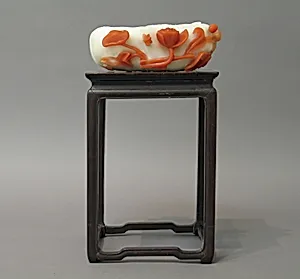
This exquisite 18th-century Chinese, carved from vibrant carnelian and pristine white agate, exemplifies pinnacle of Qing dynasty hardstone artistry. Measuring just over 3 inches high and 8 inches wide, its shallow oval form and subtle depth make it ideal for displaying precious objects or holding small delicacies, blending utility with opulent beauty. The contrasting red-orange hues of carnelian against the milky white agate create a visual harmony, likely enhanced by intricate floral motifs that evoke the natural elegance prized in Chinese decorative arts. Hardstone carving, or *gongshi* in the Chinese tradition, demanded extraordinary skill, as artisans meticulously shaped unyielding materials using rudimentary tools like chisels and abrasives. During the 18th century, under emperors like Qianlong, such pieces were commissioned for imperial palaces or elite collectors, symbolizing refinement and harmony with nature. Flowers, a recurring tag here, often represented prosperity and the fleeting beauty of life, infusing the dish with poetic symbolism. A gift to the Metropolitan Museum of Art from Heber R. Bishop in 1902, this dish highlights the global fascination with Chinese lapidary arts at the turn of the 20th century. Visitors, admire how its polished surfaces catch the light, whispering tales of imperial workshops and timeless craftsmanship.