
Dish
Unknown Artist
early 17th century
Medium
Stonepaste; painted and glazed
Dimensions
H. 2 5/16 in. (5.9 cm) Diam. 11 3/4 in. (29.8 cm) Wt. 2.3lb. (1kg)
Classification
Ceramics
Department
Islamic Art
Museum
Metropolitan Museum of Art, New York, NY
Credit
Gift of William B. Osgood Field, 1902
Accession Number
02.5.50
Rights
Public Domain
Tags
Art Historical Context
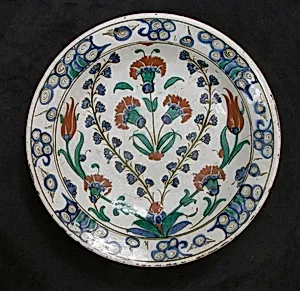
This elegant dish, crafted by an unknown artist in the 17th century, the refined ceramics of the Islamic world. Made from stonepaste—a composite material of quartz, clay, and frit that mimicked the translucency of Chinese porcelain— it was painted underglaze and glazed for a lustrous finish. Measuring just 2 5/16 inches high and 3/4 inches in diameter, its shallow form and modest 2.3-pound weight made it ideal for serving sweets, fruits, or spiced delicacies at opulent gatherings. Floral motifs, as suggested by its tags, adorn the surface, reflecting the Islamic artistic tradition of celebrating nature's beauty through stylized blossoms and vines. These designs, vibrant against the white ground, symbolized paradise gardens (jannat) and conveyed wishes for prosperity and fertility. Produced during a golden age of Ottoman or Safavid pottery workshops, such pieces highlight technical innovations like tin-glazing for durability and color retention, bridging East-West trade influences. Now in the Metropolitan Museum of Art's Islamic Art Department, this dish was a gift from William B. Osgood Field in 1902. It invites us to appreciate the everyday artistry of a bygone era, where function met exquisite beauty.