
Dish
Unknown Artist
16th century
Medium
Stonepaste; underglaze painted on white slip
Dimensions
H. 2 1/8 in. (5.4 cm) Diam. 11 11/16 in. (29.7 cm)
Classification
Ceramics
Department
Islamic Art
Museum
Metropolitan Museum of Art, New York, NY
Credit
Harris Brisbane Dick Fund, 1966
Accession Number
66.4.12
Rights
Public Domain
Tags
Art Historical Context
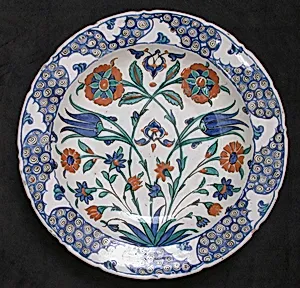
This elegant 16th-century dish, from the Metropolitan Museum of Art's Islamic collection, exemplifies the refined ceramic traditions of the Islamic world.ed as a shallow serving vessel with a height of just over 2 inches and a diameter nearing 12 inches, it would have graced dining tables or displayed fruits in affluent households. Its floral motifs, a hallmark of Islamic decorative arts, evoke the lush gardens of paradise—a recurring theme symbolizing abundance and beauty in Islamic culture. Made of stonepaste (also known as fritware), a composite material blending quartz, clay, and glass frit, the dish achieves a fine, almost porcelain-like translucency prized by Islamic potters from the 13th century onward. The intricate flower designs are painted in underglaze on a white slip—a technique originating in Iran and spreading across the Ottoman Empire and beyond. This method, fired beneath a transparent glaze, ensured vibrant, durable colors that withstood daily use, blending functionality with artistry. Acquired through the Harris Brisbane Dick Fund in 1966, this anonymous masterpiece highlights the technical innovation and aesthetic splendor of 16th-century Islamic ceramics, bridging everyday life and high art for generations of admirers.