
Dish
Unknown Artist
17th century
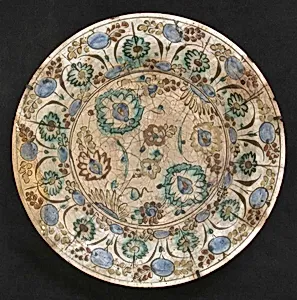
Medium
Stonepaste; underglaze painted in black, blue, and green with red and yellow slips
Dimensions
Ht. 2 5/8 in. (6.7 oz) Diam. 13 1/2 in. (34.3 cm) Wt. 41 oz. (1162.5 g)
Classification
Ceramics
Department
Islamic Art
Museum
Metropolitan Museum of Art, New York, NY
Credit
Mr. and Mrs. Isaac D. Fletcher Collection, Bequest of Isaac D. Fletcher, 1917
Accession Number
17.120.78
Rights
Public Domain
Tags
Art Historical Context
This elegant 17th-century dish from the Islamic Art collection at The Metropolitan Museum of Art exemplifies refined ceramic traditions of the world. Crafted from stonepaste—a durable, porcelain-like body developed by potters in Middle East—it measures 13½ inches in diameter, making it a substantial serving piece likely used for fruits or sweets in affluent households. Its shallow form and vibrant floral motifs, painted in underglaze black, blue, and green with red and yellow slips, evoke the lush gardens of paradise, a recurring theme in Islamic decorative arts symbolizing abundance and divine beauty. The underglaze technique, where pigments are applied beneath a transparent glaze before firing, ensured the dish's colors remained vivid and resistant to wear, showcasing potters' mastery of low-fired ceramics in regions without true porcelain. Stonepaste allowed for intricate designs without cracking, highlighting innovations from earlier centuries in Iran, Syria, or Turkey. Though the artist remains unknown, such pieces reflect the height of Ottoman or Safavid ceramic production, blending functionality with artistry. A gift from the Mr. and Mrs. Isaac D. Fletcher Collection in 1917, this dish invites visitors to appreciate how everyday objects became canvases for poetic expression in 17th-century Islamic culture.