
Vase
Unknown Artist
first half 16th century
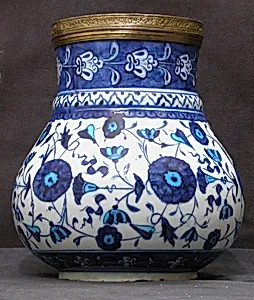
Medium
Stonepaste; underglaze painted on white slip, bronze collar
Dimensions
H. 6 7/8 in. (17.5 cm) Diam. 5 3/4 (14.6 cm)
Classification
Ceramics
Department
Islamic Art
Museum
Metropolitan Museum of Art, New York, NY
Credit
Harris Brisbane Dick Fund, 1966
Accession Number
66.4.5
Rights
Public Domain
Tags
Art Historical Context
This delicate vase, hailing from the first half of the16th century, showcases the masterful ceramic traditions of the Islamic world. Standing just under 7 inches tall with a 5¾-inch diameter, it is fashioned from stonepaste—a innovative fritware body made of quartz, clay, and glass frit—that allowed artisans to create a white, porcelain-like surface prized for its translucency and durability. The surface is adorned with underglaze painting on slip, featuring graceful floral motifs that evoke the lush gardens celebrated in Islamic culture, and topped with a gleaming bronze collar for added elegance and stability. Stonepaste ceramics like this one emerged in the 10th–11th centuries across the Middle East, reaching artistic heights by the 16th century in regions like Persia under the Safavid dynasty. The underglaze technique, where pigments are applied beneath a transparent glaze before firing, ensured vibrant, lasting colors resistant to wear—ideal for both practical use and display in wealthy households. Acquired through the Harris Brisbane Dick Fund in 1966, this vase now graces the Metropolitan Museum of Art's Islamic Art department. Its floral designs not only highlight technical virtuosity but also reflect the era's poetic reverence for nature, inviting visitors to appreciate the timeless beauty of Islamic craftsmanship.