
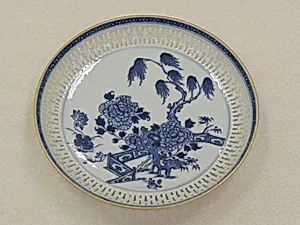
Dish
Unknown Artist
Medium
Porcelain painted in underglaze blue
Dimensions
H. 1 1/2 in. (3.8 cm); Diam. 9 3/4 in. (24.8 cm)
Classification
Ceramics
Culture & Period
China · Qing dynasty (1644–1911), Qianlong period (1736–95)
Department
Asian Art
Museum
Metropolitan Museum of Art, New York, NY
Credit
Purchase by subscription, 1879
Accession Number
79.2.1159
Rights
Public Domain
Tags
Art Historical Context
This elegant porcelain dish hails from China's Qing dynasty during the Qianlong period (6–95), a age of imperial porcelain production centered in Jingdezhen. Measuring just 1 ½ inches high and nearly 10 inches across, its shallow form and vibrant underglaze blue decoration—aturing motifs of flowers and—exemplify the refined aesthetic of the era. These naturalistic designs, painted in cobalt blue beneath a transparent glaze before high-temperature firing, evoke the harmony of nature, a recurring theme in Chinese art symbolizing prosperity and endurance. The technique of underglaze blue painting, perfected over centuries, allowed for durable, luminous colors that wouldn't fade, making such wares prized for both daily use and export. Qianlong-era porcelains like this dish were produced in vast quantities for the imperial court, elite patrons, and global trade, influencing ceramics worldwide from Europe to the Islamic world. Its subtle elegance reflects the period's emphasis on technical mastery and artistic subtlety. Acquired by subscription in 1879 for the Metropolitan Museum of Art's collection, this dish offers a window into 18th-century Chinese craftsmanship. Visitors can appreciate how such everyday objects embodied cultural prestige and technical innovation.