
Dish (coppa)
ca. 1535–40
Medium
Lustered earthenware Maiolica (tin-glazed earthenware)
Dimensions
Diameter: 10 15/16 in. (27.8 cm)
Classification
Ceramics-Pottery
Culture
Italian, probably Urbino
Department
Robert Lehman Collection
Museum
Metropolitan Museum of Art, New York, NY
Credit
Robert Lehman Collection, 1975
Accession Number
1975.1.1119
Rights
Public Domain
Tags
Art Historical Context
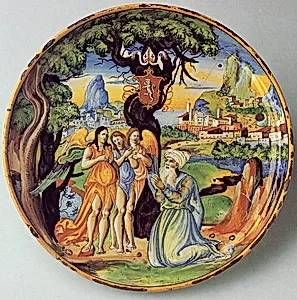
This elegant *Dish (coppa)* from the workshop of Guido Dur, dating to around 1535–40, exemplifies the Renaissance mastery of maiolica—tin-glazed earthenware originated in Italy. Produced likely Urbino, a thriving center for ceramic innovation during the 16th century, the dish measures nearly 11 inches in diameter and features lustrous glazes that allowed artists to paint vivid, jewel-like colors over an opaque white tin enamel. This technique transformed everyday earthenware into luxurious objects rivaling fine painting. The decoration, including coats of arms, male figures, and angels, reflects the era's fascination with heraldry and celestial motifs, often commissioned for wealthy patrons or as wedding gifts to symbolize family alliances and divine favor. Guido Durantino's workshop was renowned for such *istoriato* (history-painted) styles, blending narrative storytelling with opulent detail on functional tableware. Housed in the Robert Lehman Collection at The Metropolitan Museum of Art, this piece highlights Urbino's pivotal role in exporting maiolica across Europe, influencing tastes from Italy to the courts of France and Spain. Imagine it gracing a Renaissance banquet table, where beauty met utility in perfect harmony.