
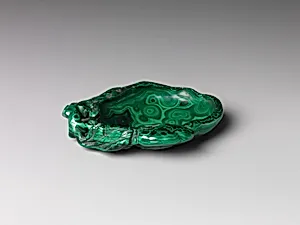
清中期 孔雀石桃形洗|Dish in the shape of a peach
Unknown Artist
late 18th–early 19th century
Medium
Malachite
Dimensions
W. 3 1/4 in. (8.3 cm); L. 4 5/8 in. (11.7 cm)
Classification
Hardstone
Culture & Period
China · Qing dynasty (1644–1911)
Department
Asian Art
Museum
Metropolitan Museum of Art, New York, NY
Credit
Gift of Heber R. Bishop, 1902
Accession Number
02.18.915
Rights
Public Domain
Art Historical Context
Nestled in the Metropolitan Museum of Art's Asian collection, this exquisite malachite dish, carved in the shape of a, dates to China's Qing dynasty (1644–1911), the late 18th to early 19th century Measuring just 4 5/8 inches long and3 1/4 inches wide, this petite *xi*—a traditional rinsing bowl for brushes or hands—showcases the era's mastery of hardstone carving. Gifted by Heber R. Bishop 1902, it the opulent decorative arts favored by Qing elites. Malachite, with its rich green veins evoking jade-like luster, was a prized material symbolizing vitality and harmony with nature. The peach form holds profound cultural resonance in China, representing immortality and longevity, often linked to the mythical peaches of the Queen Mother of the West. Artisans employed meticulous techniques to hollow out the tough stone while preserving its natural patterns, transforming a simple vessel into a sculptural gem that blurs utility and artistry. This piece highlights the Qing court's passion for virtuoso craftsmanship, where hardstones rivaled porcelain and jade in imperial workshops. Visitors will appreciate its tactile allure and timeless elegance, a window into an age of refined luxury.