
Dish (underdish for a tureen)
ca. 1735
Medium
Faience (tin-glazed earthenware)
Dimensions
Diameter: 14 7/8 in. (37.8 cm)
Classification
Ceramics-Pottery
Culture
French, Rouen
Department
European Sculpture and Decorative Arts
Museum
Metropolitan Museum of Art, New York, NY
Credit
Gift of J. Pierpont Morgan, 1917
Accession Number
17.190.1863
Rights
Public Domain
Tags
Art Historical Context
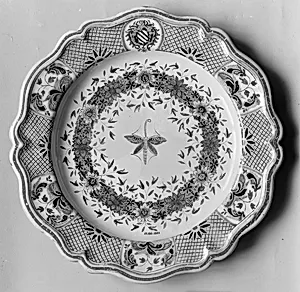
This elegant dish, crafted by Jean-Baptiste Guillib around 1735, served as an underdish for tureen in a luxurious table service. Made of faience—tin-glazed earthenware specialty of Rouen, France, it measures nearly 15 inches in diameter, perfect for displaying grand culinary presentations. Rouen faience makers like Guillibaud excelled in this medium during the early 18th century, a tin glaze to create a smooth, white surface that held vibrant colors fired at lower temperatures than porcelain, making it more accessible to the prosperous middle class and nobility. The dish's decoration, featuring delicate butterflies and blooming flowers, reflects the emerging Rococo taste for naturalistic motifs and playful asymmetry. These hand-painted details showcase Guillibaud's skill in the Rouen style, known for its bold polychrome palettes and intricate designs inspired by nature. Produced in workshops that rivaled Meissen porcelain, such pieces highlight France's leadership in ceramic innovation amid the opulent dining culture of Louis XV's reign. A generous gift from J. Pierpont Morgan in 1917, this artwork now graces the Metropolitan Museum of Art's European Sculpture and Decorative Arts collection, offering a glimpse into 18th-century French refinement and craftsmanship.