
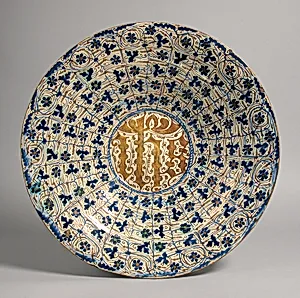
Dish with IHS Monogram and Floral Pattern
Unknown Artist
1430–60
Medium
Tin-glazed earthenware
Dimensions
Overall: 18 1/8 in. (46 cm)
Classification
Ceramics
Culture
Spanish
Department
The Cloisters
Museum
Metropolitan Museum of Art, New York, NY
Credit
The Cloisters Collection, 1956
Accession Number
56.171.103
Rights
Public Domain
Tags
Art Historical Context
This stunning Spanish dish, crafted between 1430 and 1460, exemplifies the artistry of tin-glazed earthen from late medieval Iberia. Measuring 18⅛ inches across, its broad, shallow form was ideal for serving communal meals or as a decorative wall piece in affluent homes. The central IHS monogram—a Christogram abbreviating "Iesus Hominum Salvator"Jesus, Savior of Mankind)—is encircled by lush floral motifs and scrolling leaves, blending Christian devotion with naturalistic ornamentation inspired by Islamic tile traditions. The tin-glaze technique was revolutionary for its time, creating an opaque white ground that mimicked costly Chinese porcelain, allowing vibrant pigments to shine through after firing. Produced likely in workshops like those in Manises or Valencia, these ceramics fused Mudéjar (Moorish-influenced) styles with emerging Renaissance humanism, making luxury accessible beyond metalwork. The dish's insignia underscores Spain's fervent Catholicism amid the Reconquista's final phases. Housed in The Cloisters at the Metropolitan Museum of Art since 1956, this anonymous masterpiece invites visitors to ponder everyday objects as portals to faith and cultural exchange in 15th-century Spain.