
Dish with Split-Leaf Palmette Design
Unknown Artist
ca. 1625–50
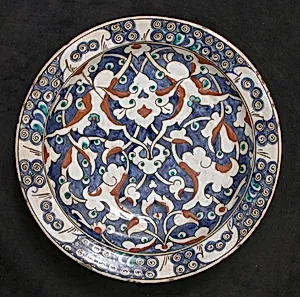
Medium
Stonepaste; polychrome painted under transparent glaze
Dimensions
H. 2 3/16 in. (5.6 cm) Diam. of rim: 11 7/8 in. (30.2 cm)
Classification
Ceramics
Department
Islamic Art
Museum
Metropolitan Museum of Art, New York, NY
Credit
Harris Brisbane Dick Fund, 1966
Accession Number
66.4.13
Rights
Public Domain
Art Historical Context
This elegant dish, crafted around 1625–50, exemplifies the refined ceramics of the Islamic world, likely produced in Ottoman Turkey. Made from stonepaste—a composite of quartz, clay, and glass frit that created a durable, ivory-white body—the vessel features polychrome painting under a transparent glaze. technique allowed artisans to achieve vibrant blues, reds, and greens that have endured centuries, showcasing the technical mastery of 17th-century potters. Measuring just over 11 inches in rim diameter and a shallow 2 inches in height, it was ideal for serving sweets, fruits, or as a decorative charger in affluent households. The central split-leaf palmette design, a stylized floral motif with symmetrical, elongated leaves, draws from longstanding Islamic decorative traditions inspired by nature and geometry. Palmettes evoked paradisiacal gardens from Persian and Ottoman art, symbolizing abundance and harmony. Such dishes from workshops like those in Iznik were prized exports, gracing tables across Europe and the Middle East. Acquired through the Harris Brisbane Dick Fund in 1966, this piece now shines in the Metropolitan Museum of Art's Islamic Art collection, inviting visitors to appreciate the timeless beauty of anonymous craftsmanship.