
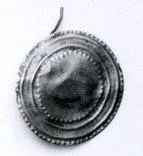
Disk ornament
Unknown Artist
13th–16th century
Medium
Gold
Dimensions
Diam. 3/4 in. (1.9 cm)
Classification
Metal-Ornaments
Culture
Colombia
Department
Arts of Africa, Oceania, and the Americas
Museum
Metropolitan Museum of Art, New York, NY
Credit
Museum Purchase, 1891
Accession Number
91.37.19
Rights
Public Domain
Art Historical Context
This delicate gold disk ornament, crafted by an unknown artist in Colombia between the 13th and 16th centuries, exemplifies the extraordinary metalworking skills of pre-Columbian in the Americas. Measuring just 3/4 inch (1.9 cm) in diameter, petite scale suggests it was likely worn as an earring, nose ornament, or part of a larger headdress, adorning the elite during rituals or daily life. Acquired by the Metropolitan Museum of through a purchase in 1891, it now resides in the Department of Arts of Africa,, and the Americas. held profound cultural significance in ancient Colombian societies, such as the Muisca and other groups, symbolizing the sun's divine power, wealth, and spiritual connection to the cosmos. Artisans hammered and possibly repoussed this soft, malleable metal into intricate forms, showcasing advanced techniques without modern tools—often using lost-wax casting or depletion gilding for luster. These ornaments were not mere jewelry but emblems of status and cosmology, buried with the dead or offered to deities. Today, this tiny treasure offers a window into a vibrant world on the cusp of European contact, highlighting Colombia's legacy as a goldworking powerhouse that rivaled the Inca and Aztecs. Visitors are invited to marvel at its enduring gleam, a testament to indigenous ingenuity.