
Document Sealing
Unknown Artist
ca. 1390–1352 B.C.
Medium
Mud
Dimensions
H. 2.5 cm (1 in.); w. 1.8 cm (11/16 in.); th. 1.1 cm (7/16 in.)
Classification
Sealing, djed, cobra
Period
New Kingdom
Department
Egyptian Art
Museum
Metropolitan Museum of Art, New York, NY
Credit
Rogers Fund, 1911, 1912
Accession Number
12.180.662
Rights
Public Domain
Art Historical Context
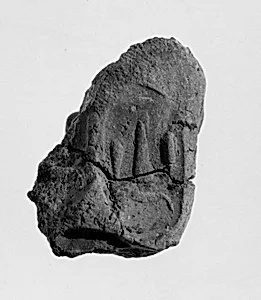
Step into the bustling world of ancient Egypt's New Kingdom, around 1390–1352 B.C., with this unassuming yet remarkable artifact: *Document Sealing*. Crafted from mud by an unknown artist during Dynasty 18—a golden age of pharaohs Amenhotep III and Tutankhamun—this tiny object measures just 2.5 cm high, 1.8 cm wide, and 1.1 cm thick. Acquired through the Rogers Fund in 1911 and 1912, it now resides in the Metropolitan Museum of Art's Egyptian Art collection. Mud, or Nile silt clay, was the everyday medium for such sealings, pressed onto rolled papyrus documents or bags to secure them against tampering. Once imprinted with a seal—likely bearing royal or official motifs—the soft mud hardened in the sun or air, creating an tamper-evident closure. This simple technique was essential for Egypt's vast bureaucracy, safeguarding everything from tax records and trade contracts to diplomatic correspondence. Though modest in scale, *Document Sealing* reveals the ingenuity of New Kingdom administration, where even the smallest tools supported an empire's complex daily operations. It invites us to imagine scribes in temple workshops, ensuring the pharaoh's word remained unbroken—a poignant reminder of how fragile materials preserved enduring power.