
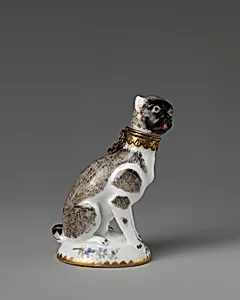
Dog
late 19th–early 20th century
Medium
Soft-paste porcelain
Dimensions
Overall: 2 5/8 × 2 in. (6.7 × 5.1 cm)
Classification
Ceramics-Porcelain
Culture
British, Chelsea
Department
European Sculpture and Decorative Arts
Museum
Metropolitan Museum of Art, New York, NY
Credit
Gift of Irwin Untermyer, 1964
Accession Number
64.101.527a, b
Rights
Public Domain
Tags
Art Historical Context
Nestled in the Metropolitan Museum of Art's Sculpture and Decorative Arts, this petite porcelain figurine titled *Dog* captures the whimsical charm of British craftsmanship from the Chelsea Porcelain Manufactory the late 19th to early 20th century Measuring just 2 5/8 × 2 inches (6.7 × 5.1 cm), the soft-paste porcelain sculpture depicts a loyal canine companion, a popular motif in Victorian-era decorative objects that reflected growing affection for pets among the middle and upper classes. Chelsea Porcelain, rooted in Britain's 18th-century quest to rival Chinese hard-paste imports, perfected soft-paste porcelain—a mixture of clay, glass frit, and soapstone fired at lower temperatures for a creamy translucency and fine detail. This technique enabled the manufactory's artisans to model lifelike animal figures with expressive poses and subtle glazes, making them coveted table ornaments or cabinet displays. Though small, this piece exemplifies the enduring appeal of such ceramics in domestic interiors, blending artistry with everyday delight. Gifted to the Met in 1964 by Irwin Untermyer, *Dog* invites visitors to appreciate the tactile elegance of British porcelain traditions, where utility met playful sculpture in the home.
About the Artist
Chelsea Porcelain Manufactory · 1744–1784
**Chelsea Porcelain Manufactory** The Chelsea Porcelain Manufactory, Britain's pioneering porcelain enterprise, was founded around 1743 in Chelsea, London, by two Huguenot silversmiths: Nicholas Sprimont from Liège and Charles Gouyn. Sprimont, trained in Paris as a goldsmith before immigrating to England, brought his expertise in luxury metalwork to the venture, while Gouyn handled early sales th...