
Doll - "Amelia"
c. 1937
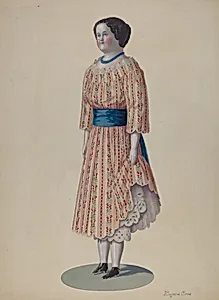
Medium
watercolor, graphite, and gouache on paperboard
Dimensions
overall: 57.5 x 42.8 cm (22 5/8 x 16 7/8 in.) Original IAD Object: 19 1/4" high
Classification
Index of American Design
Department
CG-W
Museum
National Gallery of Art, Washington, D.C.
Credit
Index of American Design
Accession Number
1943.8.15505
Rights
Public Domain
Art Historical Context
Step into the enchanting world of American folk art with *Doll - "Amelia"*, a captivating watercolor, graphite, and gouache rendering by Eugene Croe, created around 1937. Measuring 57.5 x 42.8 cm, this depiction captures the charm of a 19 1/4-inch-high antique doll, showcasing Croe's skill in blending translucent watercolors for subtle shading, opaque gouache for vibrant highlights and precise graphite lines for intricate features. Housed in the National Gallery of Art's of American Design collection, it invites viewers to appreciate the tactile elegance of early 20th-century doll craftsmanship. This artwork emerged from the Index of American Design, a groundbreaking WPA Federal Art Project (1935–1942) during the Great Depression. Artists like Croe meticulously documented everyday American objects—folk art, crafts, and designs—to preserve the nation's cultural heritage amid economic hardship. By rendering "Amelia" with lifelike accuracy, Croe highlighted dolls as cherished artifacts of domestic life, evoking nostalgia for handmade toys that embodied regional traditions and ingenuity. Today, *Doll - "Amelia"* stands as a testament to America's artistic legacy, bridging fine art techniques with vernacular objects. Its vivid medium elevates a simple plaything into a cultural icon, reminding us how ordinary items reflect the creativity and resilience of past generations. (198 words)
About the Artist
Eugene Croe · 1875–1953
Eugene Croe (c. 1875–1953) was an American artist whose career is primarily documented through his contributions to the Index of American Design, a Federal Art Project under the Works Progress Administration (WPA) during the 1930s and 1940s. This ambitious initiative commissioned artists to create precise illustrations of American folk art, decorative arts, and everyday objects, preserving a visua...