
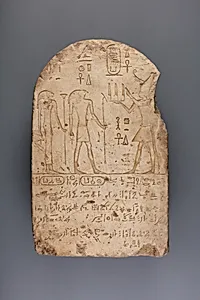
Donation Stela of Shabaqo
Unknown Artist
ca. 712–698 B.C.
Medium
Limestone
Dimensions
H. 37.5 × W. 23 × D. 5.8 cm, 10.6 kg (14 3/4 × 9 1/16 × 2 5/16 in., 23.4 lb.)
Classification
Stela, Donation, Shabaqo
Period
Third Intermediate Period
Department
Egyptian Art
Museum
Metropolitan Museum of Art, New York, NY
Credit
Rogers Fund, 1955
Accession Number
55.144.6
Rights
Public Domain
Tags
Art Historical Context
Step into the world of ancient Nubian kings with the *Donation Stela ofabaqo*, a finely carved limestone monument from Egypt's Third Intermediate Period (ca. 712–698 B.C.). Created during Dynasty 25, the Kushite era, when rulers from Nubia (modern Sudan) conquered and revitalized Egypt, this stela honors Pharaoh Shabaqo. Standing just 37.5 cm tall, it exemplifies the portable yet powerful stone slabs used to proclaim royal piety and eternalize donations to temples or deities. The surface is densely inscribed with hieroglyphs, a hallmark of Egyptian artistry that blends precise carving with symbolic depth. Depictions of Horus, the falcon-headed god of kingship, and a protective goddess underscore themes of divine favor and legitimacy. Kushite pharaohs like Shabaqo masterfully revived Old Kingdom styles, using low-relief techniques on durable limestone to ensure the text's legibility for eternity—likely recording a generous offering to secure the gods' blessings amid political upheaval. This stela, acquired through the Rogers Fund in 1955, offers a window into how foreign rulers embraced Egyptian traditions to legitimize their reign. At the Metropolitan Museum of Art, it invites us to ponder the cultural fusion that made Dynasty 25 a bridge between African and Egyptian heritage.