
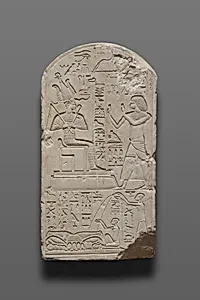
Stela of Senu Adoring Osiris
Unknown Artist
ca. 1390–1352 B.C.
Medium
Limestone
Dimensions
H. 62.9 × W. 33 × D. 5.7 cm, 22.2 kg (24 3/4 × 13 × 2 1/4 in., 48.9 lb.)
Classification
Stela, Senu
Period
New Kingdom
Department
Egyptian Art
Museum
Metropolitan Museum of Art, New York, NY
Credit
Rogers Fund, 1918
Accession Number
18.2.5
Rights
Public Domain
Art Historical Context
Step into the timeless world of ancient Egypt with the *Stela of Senu Adoring Osiris*, a limestone monument from the New Kingdom's Dynasty 18, dating to around 1390–1352 B.C. Carved in low relief, this 62.9 cm tall slab captures Senu, a man of likely modest status, in a gesture of profound devotion to Osiris, the god of the underworld and resurrection. Adorning the surface are intricate hieroglyphs, typical of such stelae, which would have inscribed the deceased's name, titles, and offering formulas to invoke eternal sustenance for his ka, or spirit, in the afterlife. Crafted from durable limestone—a favored medium for its workability and longevity—this stela exemplifies the artistic conventions of the era, where rigid, idealized figures conveyed stability and divine order (ma'at). Placed in a tomb or chapel, it served as a magical proxy, ensuring priests or passersby performed rituals on Senu's behalf long after his death. Dynasty 18 marked Egypt's imperial zenith under pharaohs like Amenhotep III, blending artistic refinement with deep religious fervor. Today, this evocative piece, acquired through the Rogers Fund in 1918, graces the Metropolitan Museum of Art's Egyptian Art collection, offering visitors a window into personal piety amid monumental history.