
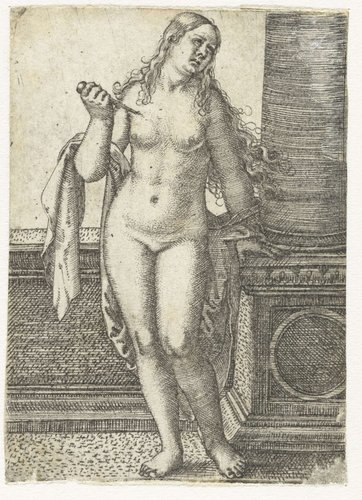
Dood van Lucretia
1512 - 1540
Medium
engraving
Dimensions
61; 44
Rights
Public Domain
About this artwork
verzamelaarsmerk, verso midden, gestempeld: Lugt 2228a
Art Historical Context
**Dood van Lucretia (The Death of Lucretia *Barthel Beham, c. 1512–1540, Engraving, 61 × 44 mm* Barthel Beham, a German engraver of the Northern Renaissance and one of the "Little Masters," the tragic tale of Lucretia in this intimate engraving. Lucretia, a virtuous Roman noblewoman, became a symbol of chastity and honor after her rape by Sextus Tarquinius, leading to her suicide and the fall of Rome's monarchy. Created during Beham's active years (1512–1540), the print reflects the era's fascination with classical antiquity, blending moral storytelling with Renaissance humanism. Beham's mastery shines in the engraving technique, where fine lines and meticulous detail convey drama within a tiny 61 × 44 mm format—ideal for collectors' albums. As a Little Master, he excelled in such small-scale works, rivaling painting in precision and narrative depth. The verso bears a collector's mark (Lugt 2228a), stamped centrally, hinting at its prized status among connoisseurs like those documented by Frits Lugt. This piece underscores engraving's role in democratizing art, making classical myths accessible beyond grand canvases. A poignant reminder of virtue's cost, it invites viewers to ponder timeless themes of justice and integrity.
About the Artist
Barthel Beham · 1502–1540
Barthel Beham (1502–1540), a pivotal figure in the German Renaissance, was born in Nuremberg into a family of artists. The younger brother of the renowned engraver Hans Sebald Beham, he honed his craft under the tutelage of his elder sibling and the master Albrecht Dürer, absorbing the precise techniques of engraving and painting that defined Nuremberg's vibrant artistic scene. Emerging as a prodi...