
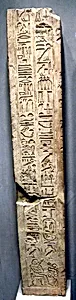
Door Jamb of Rau
Unknown Artist
ca. 1479–1425 B.C.
Medium
Limestone
Dimensions
H. 146.5 cm (57 11/16 in.); w 23.5 cm (9 1/4 in.)
Classification
Door Jamb, Rau
Period
New Kingdom
Department
Egyptian Art
Museum
Metropolitan Museum of Art, New York, NY
Credit
Rogers Fund, 1926
Accession Number
26.2.54
Rights
Public Domain
Tags
Art Historical Context
Step into the grandeur of ancient Egypt with the *Door Jamb of Rau*, striking limestone relief from the New Kingdom's Dynasty 18 (ca. 1479–1425 B.C.). This architectural fragment, standing over 57 inches tall, once flanked the entrance to a tomb or temple, serving as a threshold between the earthly realm and the divine. Crafted during Egypt's imperial zenith—under pharaohs like Hatsheut and Thutmose III—it reflects the era's obsession with eternity, where door jambs protected the deceased and invoked divine favor through inscribed prayers and names. Carved in low relief on durable limestone, the jamb features finely incised hieroglyphs, a hallmark of New Kingdom artistry. These sacred symbols, likely detailing Rau's titles or offerings to gods, showcase the scribes' precision and the culture's belief in the written word's magical power. The narrow width (just 9 inches) hints at its functional role in monumental architecture, blending utility with profound symbolism. Acquired through the Rogers Fund in 1926, this piece at the Metropolitan Museum of Art transports us to a time when stone whispered immortality. Marvel at how such everyday elements encapsulated a civilization's spiritual worldview.