
Double beaker
1609–29
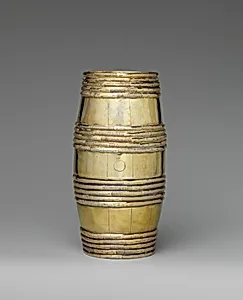
Medium
Silver-gilt
Dimensions
Overall (confirmed): 8 1/8 × 4 3/16 × 4 3/16 in., 15.184oz. (20.6 × 10.6 × 10.6 cm, 430.508g)
Classification
Metalwork-Silver
Culture
German, Nuremberg
Department
European Sculpture and Decorative Arts
Museum
Metropolitan Museum of Art, New York, NY
Credit
Gift of Mrs. Charles Wrightsman, 2008
Accession Number
2008.543.2a, b
Rights
Public Domain
Art Historical Context
This exquisite *Double Beaker* by Nuremberg goldsmith Peter Wiber, crafted between 1609 and 1629, exemplifies the pinnacle of early Baroque German metalwork. Made of silver-gilt—a luxurious technique where a thin layer of gold is applied over silver for a radiant finish—the piece measures just over 8 inches tall and weighs about 15 ounces. Housed in the Metropolitan Museum of Art's European Sculpture and Decorative Arts department, it was generously gifted by Mrs. Charles Wrightsman in 2008. Nuremberg, a thriving hub of craftsmanship in the Holy Roman Empire, was renowned for its masterful silversmiths who produced intricate vessels for elite banquets and civic ceremonies. The double beaker design, with two stacked cups that could separate for toasting or games, reflects the era's love for functional yet opulent objects. Wiber's work likely features the fine chasing, engraving, and repoussé techniques typical of the guild-trained artisans, blending practicality with symbolic grandeur. As a cultural artifact, this beaker highlights the prosperity of 17th-century German burghers, who commissioned such items to display wealth and hospitality. Its survival offers a glimpse into Renaissance-to-Baroque transitions in decorative arts, where everyday silver evolved into status symbols cherished across generations.