
Double Column
Unknown Artist
13th–14th century
Medium
Marble
Dimensions
Overall (a: Capital): 16 1/2 x 21 3/4 x 13 3/8 in. (41.9 x 55.2 x 34 cm) Overall (b: Base): 8 3/4 x 19 3/8 x 10 3/4 in. (22.2 x 49.2 x 27.3 cm)
Classification
Sculpture-Architectural
Culture
French
Department
Medieval Art
Museum
Metropolitan Museum of Art, New York, NY
Credit
Gift of J. Pierpont Morgan, 1916
Accession Number
16.32.4a, b
Rights
Public Domain
Art Historical Context
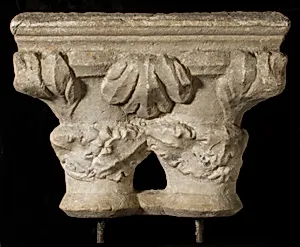
Behold the *Double Column*, a striking example of French medieval architectural sculpture from the 13th–14th century, crafted from enduring marble. This piece consists of a finely carved capital (measuring 16½ × 21¾ × 13⅜ inches) and a sturdy base (8¾ × 19⅜ × 10¾ inches), to support the soaring vaults and arches of Gothic cathedrals Though the artist remains unknown, the work exemplifies the masterful stoneworking techniques of the High Gothic period in France, where masons achieved remarkable precision in shaping marble to bear immense structural loads while adding decorative flair. In the context of medieval France, such columns were integral to grand ecclesiastical buildings like those in Île-de-France, symbolizing both engineering prowess and spiritual aspiration. The paired design reflects the era's emphasis on symmetry and rhythm, enhancing the luminous interiors of churches through clustered columns that multiplied visual complexity. Marble's translucency and durability made it ideal for these elements, allowing light to play across foliate motifs often carved into capitals. A generous gift from J. Pierpont Morgan in 1916, this *Double Column* now graces the Metropolitan Museum of Art's Medieval Art collection, inviting us to marvel at the anonymous artisans whose labor elevated stone into sacred architecture.