
Double Column
Unknown Artist
13th–14th century
Medium
Marble
Dimensions
Overall (a: Capital): 16 1/4 x 21 3/4 x 13 in. (41.3 x 55.2 x 33 cm) Overall (b: Base): 8 7/8 x 19 1/4 x 10 1/2 in. (22.5 x 48.9 x 26.7 cm)
Classification
Sculpture-Architectural
Culture
French
Department
Medieval Art
Museum
Metropolitan Museum of Art, New York, NY
Credit
Gift of J. Pierpont Morgan, 1916
Accession Number
16.32.7a, b
Rights
Public Domain
Art Historical Context
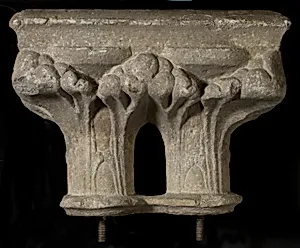
This elegant *Double Column*, crafted from marble by an unknown French sculptor in the 13th–14th century, exemplifies architectural splendor of medieval Gothic cathedrals.prising a finely carved capital (16¼ × 21¾ × 13 in.) and a sturdy base (8⅞ × 19¼ × 10½ in.), it likely supported vaulted arches or arcades in a grand ecclesiastical structure, such as those found in Île-de-France or northern French churches during the High Gothic period. Marble's durability and luminous quality made it ideal for such sculptural elements, allowing artisans to showcase exquisite stoneworking techniques—precise tooling for smooth shafts and intricate detailing on the capital, possibly evoking natural motifs like foliage or biblical scenes common to the era. These columns were not mere supports but vital to the vertical thrust and ethereal light of Gothic designs, symbolizing spiritual aspiration amid the era's religious fervor and burgeoning technical prowess. A generous gift from J. Pierpont Morgan in 1916, this piece now graces The Metropolitan Museum of Art's Medieval Art collection, offering visitors a tangible link to France's architectural golden age. Stand close and imagine its role in a soaring nave, whispering tales of medieval devotion.