
Double Saddle Bag (Khorjin)
Unknown Artist
ca. 1900
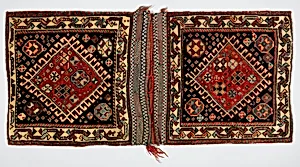
Medium
Wool; pile weave (front), doublecloth, tapestry weave (back), sumak brocaded
Dimensions
H. 41 in. (104.1 cm) W. 19 in. (48.3 cm)
Classification
Textiles-Woven-Brocade
Department
Islamic Art
Museum
Metropolitan Museum of Art, New York, NY
Credit
Gift of Inger G. and William B. Ginsberg, 2015
Accession Number
2015.490.39
Rights
Public Domain
Art Historical Context
This exquisite Double Saddle Bag, or *khorjin*, hails from around 1900 and exemplifies the masterful textile traditions of Islamic nomadic cultures, likely from Persia or Central Asia. Craft for practical use by tribal horsemen, these bags were slung over saddles to carry essentials like grain, clothing, or tools during migrations. Their dual design—two pouches joined by a wide band—made them indispensable for pastoral life, blending utility with stunning visual appeal in the Metropolitan Museum of Art's Islamic Art collection. The front features a lush wool pile weave, akin to the knotted technique of fine carpets, creating a velvety texture and vibrant patterns. The back employs sophisticated doublecloth and tapestry weaves, with sumak brocading—a supplementary weft method that interlaces colored yarns for bold, geometric motifs without added bulk. These techniques highlight the weavers' ingenuity, using portable looms to produce durable, reversible pieces that withstood harsh environments. At 41 inches high and 19 inches wide, this generous *khorjin* reflects early 20th-century nomadic pride in craftsmanship, where every knot encoded cultural identity. A generous gift to the Met, it invites us to appreciate how everyday objects became canvases for artistry in a vanishing world of tents and trails.