
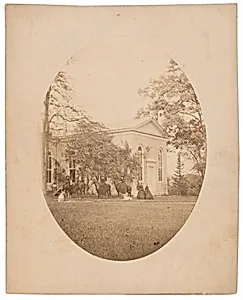
Doughoregan Manor, Maryland
c. 1860
Medium
albumen print
Dimensions
image/sheet: 13 × 9.8 cm (5 1/8 × 3 7/8 in.) mount: 16.7 × 13.5 cm (6 9/16 × 5 5/16 in.)
Classification
Photograph
Department
CPH
Museum
National Gallery of Art, Washington, D.C.
Credit
Ross J. Kelbaugh Collection, Purchased with support from the Ford Foundation
Accession Number
2023.39.174
Rights
Public Domain
Art Historical Context
**Doughoregan Manor Maryland** *Henry Pollock, c. 1860* Albumen print; image/sheet: 13 × 9.8 cm (5 1/8 × 3 7/8 in.); mount: 16.7 × 13.5 cm (6 9/16 × 5 5/16 in.) National Gallery of Art, Ross J. Kelbaugh Captured around 1860 by photographer Henry Pollock this intimate albumen print showcases Doughoregan Manor, grand estate in Howard County, Maryland, home the prominent Carroll family. Built in the 18th by Charles Carroll of Carrollton—a signer of the Declaration of Independence—the manor symbolizes early American aristocracy and colonial heritage. Pollock's image, taken on the eve of the Civil War, preserves a serene view of this historic site, highlighting its architectural elegance amid a turbulent era when Maryland navigated its border-state loyalties. The albumen print medium, a hallmark of mid-19th-century photography, brought unprecedented detail and tonal richness to such scenes. Coated with egg whites to hold light-sensitive chemicals, these prints offered sharp clarity in small formats, making them ideal for documenting landscapes and architecture. Pollock's modest dimensions—perfectly portable on a sturdy mount—reflect photography's growing role in preserving vanishing American vistas, now treasured in the National Gallery of Art's collection. This work invites us to glimpse a pivotal moment in U.S. history through the lens of early visual storytelling.