
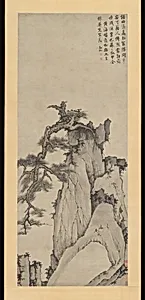
清 倣弘仁 黃山蟠龍松圖 軸|Dragon Pine on Mount Huang
ca. 1660
Medium
Hanging scroll; ink and pale color on paper
Dimensions
Image: 76 1/4 x 31 in. (193.7 x 78.7 cm) Overall with mounting: 120 1/4 x 38 1/2 in. (305.4 x 97.8 cm) Overall with knobs: 120 1/4 x 41 3/4 in. (305.4 x 106 cm)
Classification
Paintings
Culture & Period
China · Qing dynasty (1644–1911)
Department
Asian Art
Museum
Metropolitan Museum of Art, New York, NY
Credit
Gift of Douglas Dillon, 1976
Accession Number
1976.1.2
Rights
Public Domain
Tags
Art Historical Context
This hanging scroll, *Dragon Pine on Mount Huang created around 1660 during the early Qing dynasty (1644–1911), emulates the distinctive style of Hongren (1610–1664), a renowned monk-artist of the Anhui School.ren's stark, monumental depictions of Huangshan (Yellow Mountain) revolutionized Chinese landscape painting, emphasizing rugged peaks and resilient pines with bold, angular brushstrokes. Here, an unidentified artist channels that spirit, portraying a gnarled pine twisting like a dragon amid misty cliffs—a symbol of endurance and harmony with nature in Chinese culture. Executed in ink with subtle pale colors on paper, the work exemplifies literati painting techniques: economical lines and washes that evoke vastness and introspection rather than photorealism. At over six feet tall (image: 76¼ × 31 in.), its grand scale suited elite hanging-scroll displays for scholarly contemplation during gatherings. Huangshan's pines, often personified as dragons, held deep Daoist resonance, representing immortality and the sublime beauty of China's sacred mountains. A gift to the Metropolitan Museum of Art from Douglas Dillon in 1976, this piece invites visitors to ponder the Qing era's blend of reverence for Ming traditions and innovative naturalism, bridging personal expression with timeless landscapes.
About the Artist
Hongren|Unidentified artist · 1610–1664
Was noted as a central figure in the Anhwei school of painting.