
Drawing
Medium
Drawing
Classification
Drawing
Department
Smithsonian Collection
Museum
Smithsonian American Art Museum
Credit
Smithsonian American Art Museum, Gift of John Gellatly
Accession Number
1929.7.163
Rights
Public Domain
Tags
Art Historical Context
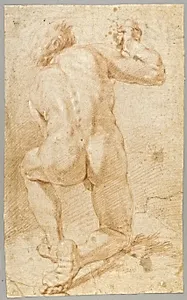
Paolo de Matteis (1662–1728), a prominent Italian Baroque painter from, created this untitled drawing as an academic study of the nude. Working in an era dominated by dramatic compositions and classical influences from artists like the Carracci brothers, de Matteis often prepared his grand history paintings and religious works through such meticulous sketches. This piece exemplifies the rigorous training of the Accademia di San Luca tradition, where artists honed their mastery of human anatomy through life drawing. As a drawing medium, it likely employs techniques like chalk, ink, or wash to capture contour, volume, and subtle musculature—essential for translating the three-dimensional body onto canvas. Nude studies like this were foundational in Baroque academies, bridging Renaissance ideals of proportion with the era's emphasis on emotional realism and movement. Though the exact date is unknown, it reflects de Matteis's commitment to antique-inspired naturalism. Now housed in the Smithsonian American Art Museum as part of the Smithsonian Collection, this work was generously gifted by collector John Gellatly. It invites visitors to appreciate the behind-the-scenes labor that elevated Baroque art, reminding us how intimate sketches fueled monumental masterpieces.