
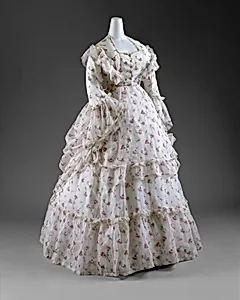
Dress
Unknown Artist
ca. 1872
Medium
a) cotton, porcelain; b) cotton
Classification
Dress
Culture
French
Department
Costume Institute
Museum
Metropolitan Museum of Art, New York, NY
Credit
Purchase, Irene Lewisohn Bequest, 2003
Accession Number
2003.426a, b
Rights
Public Domain
Art Historical Context
This elegant French dress, dating to around 1872, exemplifies theulent fashion of the Second Empire's final years, just before the Third Republic's rise. Crafted primarily from cotton—a lightweight, breathable fabric ideal for layered 19th-century silhouettes—it incorporates delicate porcelain elements, likely in buttons, beads, or trims, adding a touch of luxury and whimsy. The two-part construction (a: cotton, porcelain; b: cotton suggests a bodice and skirt ensemble, typical of the era's daywear, designed for both comfort and visual drama. In the 1870s, French couture was at its pinnacle, with Paris dictating global trends amid post-Franco-Prussian War recovery. Dresses like this reflected the transition from crinolines to emerging bustles, emphasizing the waist and hips while showcasing intricate detailing. Porcelain accents, rare in everyday wear, highlight artisanal innovation, blending textile craftsmanship with ceramic finesse for a refined, tactile appeal. Acquired through the Irene Lewisohn Bequest in 2003, this piece graces the Metropolitan Museum of Art's Costume Institute, preserving a snapshot of bourgeois femininity. Visitors can appreciate how such garments shaped social identity, whispering stories of elegance in a transformative age.