
Dressing Table
Unknown Artist
1780–1810
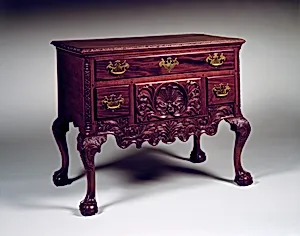
Medium
Mahogany, tulip poplar
Dimensions
29 5/8 x 35 1/2 x 21 5/8 in. (75.2 x 90.2 x 54.9 cm)
Classification
Dressing Table
Culture
American
Department
The American Wing
Museum
Metropolitan Museum of Art, New York, NY
Credit
John Stewart Kennedy Fund, 1918
Accession Number
18.110.2
Rights
Public Domain
Art Historical Context
Step into the refined world of early American domestic life with this elegant dressing table, crafted between 1780 and 1810 by an unknown artisan. Measuring a compact 29⅝ × 35½ × 21⅝ inches, it features a graceful form typical of Federal-period furniture, designed for personal grooming in a lady's bedroom. Its mahogany veneer over tulip poplar construction highlights the era's masterful cabinetmaking, where imported mahogany—a prized tropical hardwood symbolizing wealth and sophistication—was layered atop abundant local tulip poplar for structural strength and affordability. Produced during the young United States' formative years, post-Revolution, this piece reflects the blend of British neoclassical influences and emerging American ingenuity. Mahogany's rich, figured grain would have gleamed under candlelight, underscoring the owner's status amid a growing merchant class. Dressing tables like this were essential to daily rituals, often holding mirrors, combs, and perfumes, and they embodied the period's emphasis on symmetry, proportion, and functionality in home furnishings. Housed in The Metropolitan Museum of Art's American Wing and acquired through the John Stewart Kennedy Fund in 1918, this table offers a tangible glimpse into 18th- and 19th-century households. Its survival speaks to the enduring craftsmanship of anonymous makers who shaped America's decorative arts heritage.