
Dressing Table
1755–90
Medium
Mahogany, yellow pine, yellow poplar, and Atlantic white cedar
Dimensions
74.3 × 89.2 × 57.3 cm (29 1/4 × 35 1/8 × 22 1/2 in.)
Classification
table
Department
Arts of the Americas
Museum
Art Institute of Chicago
Accession Number
55123
Rights
Public Domain
Art Historical Context
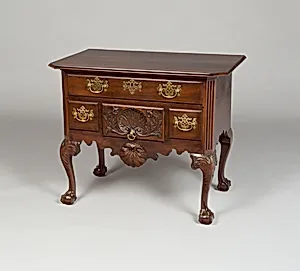
This elegant dressing table, crafted between 1755 and 1790, exemplifies the refined woodworking traditions of colonial America. Made from a harmonious blend of mahogany, yellow pine, yellow poplar, and Atlantic white cedar, it measures 74.3 × 89.2 × 57.3 cm, perfectly scaled for intimate personal use in a bedchamber. The choice of mahogany—an imported tropical hardwood—highlights the era's growing transatlantic trade networks, while the secondary woods sourced locally underscore resourceful American craftsmanship by an unknown maker. As a functional yet decorative piece in the Arts of the Americas, this table served as a vanity for grooming and storage, reflecting the domestic rituals and rising affluence of the late colonial and early Federal periods. Its sturdy construction likely featured dovetailed drawers and subtle moldings, techniques that ensured durability amid everyday use. Such furniture pieces were status symbols in prosperous households, blending practicality with understated elegance characteristic of regional styles like those from New England or the Mid-Atlantic workshops. Today, housed in the Art Institute of Chicago, this anonymous masterpiece invites us to ponder the skilled hands behind America's furniture heritage, bridging utility and artistry in the young nation's material culture.