
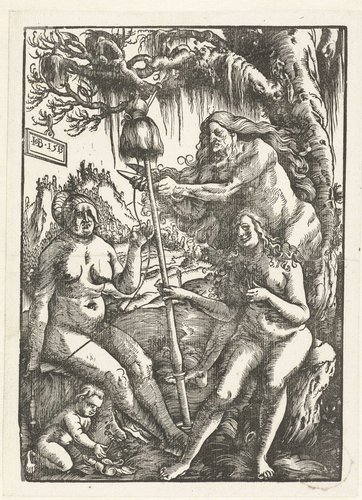
Drie schikgodinnen: Lachesis, Atropos en Clotho
Medium
paper
Dimensions
156; 219
Rights
Public Domain
About this artwork
verzamelaarsmerk, verso linksonder, gestempeld: Lugt 240
Art Historical Context
Behold the intricate drawing *Drie schikgodinnen: Lachesis, Atropos en Clotho (Three Fates: Lachesis, Atropos, and Clotho), created by the masterful German Renaissance artist Hans Baldung G in 1513. This small yet captivating work on paper (219 × 156 mm) depicts the mythological sisters who control human destiny: Clotho spinning life's thread, Lachesis its length, and Atropos snipping it short. Baldung Grien, a protégé of Matthias Grünewald and influenced by Albrecht Dürer, infused his art with dramatic tension, blending Northern Renaissance precision with Gothic intensity and a fascination for mortality. In the early 16th century, Strasbourg-based Baldung Grien often explored themes of fate, death, and the supernatural, making this piece a poignant *memento mori*—a reminder of life's fragility amid the era's religious upheavals and humanist curiosity. His fluid line work and expressive figures showcase his prowess in pen-and-ink drawings, prized for their emotional depth and technical virtuosity. Bearing a collector's mark (Lugt 240) on the verso lower left, this gem traces its lineage to esteemed connoisseurs like Frits Lugt, underscoring its enduring allure. A window into Renaissance imagination, it invites visitors to ponder the inexorable weave of time.
About the Artist
Hans Baldung Grien
Hans Baldung, known by the nickname Grien, was born around 1484 or 1485 in Schwäbisch Gmünd, in the Swabia region of what is now Germany. He came from a distinguished academic family — his father Johann Baldung was a university-educated jurist who served as legal adviser to the bishop of Strasbourg — making Hans a notable exception as the first male in his family not to attend university, and one ...