
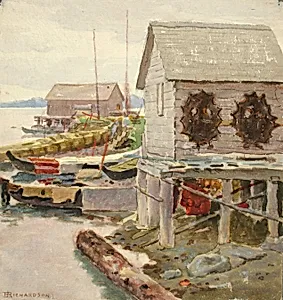
Drying Skins, Sitka
ca. 1880-1914
Medium
Painting
Classification
Painting
Department
Smithsonian Collection
Museum
Smithsonian American Art Museum
Credit
Smithsonian American Art Museum, Gift of Mrs. Theodore J. Richardson
Accession Number
1985.66.326,791
Rights
Public Domain
Tags
Art Historical Context
**Drying Skins, Sitka** by Theodore J. Richardson (ca. 1880-1914) captures a vivid snapshot of daily life in the remote Alaskan harbor of Sitka. This oil painting depicts Indigenous people drying animal skins amid a bustling scene of fishing canoes, game, and waterfront activity. Created during a transformative era when Alaska shifted from Russian territory to U.S. possession (post-1867), Richardson's work reflects the rugged self-sufficiency of coastal communities, likely Tlingit or other Native Alaskans, who relied on hunting and fishing for survival. The painting's historical significance lies in its documentation of traditional practices in Sitka, a hub of cultural exchange with its Russian Orthodox heritage and totem-laden shores. As a realistic rendering in oil—a medium prized for its depth and luminosity—Richardson's composition highlights the harmony between humans and nature, evoking the challenges and rhythms of frontier life before widespread modernization. Today, this treasured piece graces the Smithsonian American Art Museum, gifted by the artist's widow. It invites visitors to ponder the enduring legacy of Alaska's Indigenous ingenuity and the artist's eye for authentic, unromanticized narratives. (198 words)