
Medium
nature studies
Classification
nature studies
Department
Smithsonian Collection
Museum
Smithsonian American Art Museum
Credit
Gift of Henrietta Haller
Accession Number
1904-16-167
Rights
Public Domain
About this artwork
Research in Progress
Art Historical Context
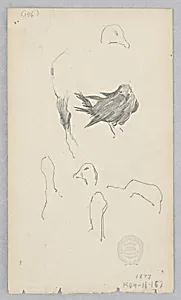
**Ducks** *Robert Frederick Blum (American, 1857–1903), 1877 Nature studies Smithsonian American Art Museum, of Henrietta Haller when Robert Frederick Blum was just 20 years old, *Ducks* (1877) offers a glimpse into the early training of this promising American artist. As nature studies, these works exemplify the meticulous observation skills essential to 19th-century art education. Blum, who would later gain renown for his evocative genre scenes and Japanese-influenced prints, began his career honing techniques through direct study of the natural world—capturing the subtle forms, feathers, and movements of ducks with precision and sensitivity. In the late 1870s, American artists like Blum embraced nature studies as foundational exercises, bridging academic traditions with the era's growing fascination with realism and the American landscape. Whether quick sketches or detailed renderings, such pieces sharpened an artist's eye for anatomy and light, preparing them for more ambitious compositions. Housed in the Smithsonian American Art Museum's Smithsonian Collection, *Ducks* reflects this vital practice, generously gifted by Henrietta Haller. Though research on this piece is ongoing, *Ducks* invites visitors to appreciate the quiet artistry behind the masterpieces. It reminds us how everyday subjects like waterfowl fueled creative growth in Gilded Age America, blending scientific curiosity with aesthetic delight.