
Durga
Unknown Artist
late 5th–early 6th century
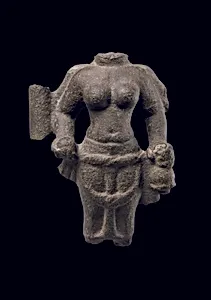
Medium
Sandstone
Dimensions
H. 7 9/16 in. (19.2 cm); W. 5 5/8 in. (14.3 cm); D. 2 3/4 in. (7 cm)
Classification
Sculpture
Culture
Southern Thailand
Department
Asian Art
Museum
Metropolitan Museum of Art, New York, NY
Credit
Samuel Eilenberg Collection, Ex Coll.: Columbia University, Purchase, Lila Acheson Wallace Gift, 1987
Accession Number
1987.218.20
Rights
Public Domain
Tags
Art Historical Context
This exquisite sandstone sculpture of Durga, crafted by an unknown artist in southern Thailand during the late th to early 6th century captures the fierce Hindu goddess in a compact form—measuring just 7 9/16 inches high 5 5/8 inches wide, 2 3/4 inches deep.ved from resilient sandstone, a favored medium for enduring outdoor monuments in ancient Southeast Asia, its modest scale suggests it served as a devotional object, perhaps for personal worship or portable shrines. Durga, a powerful warrior deity in Hinduism, embodies divine feminine energy (Shakti) and is revered as the slayer of the buffalo demon Mahisha, symbolizing the triumph of good over evil. This early representation highlights the spread of Hindu traditions from India to Thailand, coinciding with maritime trade routes that carried religious ideas and artistic motifs across the region. Housed in the Metropolitan Museum of Art's Asian Art Department (Samuel Eilenberg Collection, 1987), the sculpture showcases refined carving techniques of the era, with smooth surfaces and dynamic posing that convey the goddess's vitality. Its survival offers a rare glimpse into pre-Angkorian religious life, inviting visitors to ponder the ancient devotion it once inspired.