
Nagini (Serpent Queen or Consort of Nagaraja)
Unknown Artist
second quarter of the 5th century
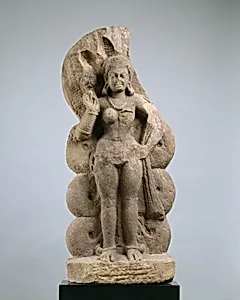
Medium
Stone
Dimensions
H. 34 1/2 in. (87.6 cm)
Classification
Sculpture
Culture & Period
India (Madhya Pradesh) · Gupta period
Department
Asian Art
Museum
Metropolitan Museum of Art, New York, NY
Credit
Gift of Evelyn Kossak, The Kronos Collections, 1987
Accession Number
1987.415.2
Rights
Public Domain
Tags
Art Historical Context
Behold the graceful *Nagini (Serpent Queen or Cons of Nagaraja)*, stunning stone sculpture from India's Gupta period (second quarter of the th century), hailing from Madhya Pradesh.ved from stone to a height of 34½ inches, this work captures a mythical female serpent deity, consort to the serpent king Nagaraja. In mythology, nagas were revered as powerful guardians of water, fertility, and the underworld, often worshipped for protection against evil. Created during the Gupta era—India's "Golden Age" of art—this piece exemplifies the period's classical refinement. Gupta sculptors mastered stone carving to achieve idealized proportions, serene expressions, and fluid drapery that evoke spiritual harmony. The Nagini's poised stance and intricate details, such as jewelry and flowing garments, highlight the era's emphasis on divine beauty and symmetry, blending human elegance with otherworldly mysticism. Housed in the Metropolitan Museum of Art's Asian Art Department (gift of Evelyn Kossak, The Kronos Collections, 1987), this sculpture offers a window into ancient devotional practices. It reminds us how Gupta art elevated everyday stone into timeless icons of cultural reverence, celebrating the sacred feminine in a world of myth and reverence.