
Eagle
c. 1890
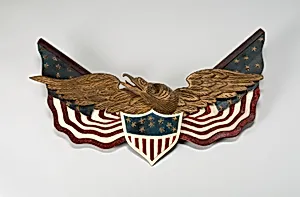
Medium
White pine
Dimensions
43.2 × 74.3 cm (17 × 29 1/4 in.)
Classification
sculpture
Department
Arts of the Americas
Museum
Art Institute of Chicago
Accession Number
90371
Rights
Public Domain
Art Historical Context
John Haley Bellamy's *Eagle* (c. 1890), carved from white pine, exemplifies the vibrant tradition of American folk art in late 19th century. Measuring 17 × 29¼ inches, this dynamic sculpture captures the bald eagle—the enduring symbol of American freedom and strength—in a bold, low-relief style. Bellamy a self-taught car from New Hampshire, produced of these patriotic emblems between the 1870s and 1910s, often commissioned for ship figureheads, lodge signs, and public buildings during the post-Civil War era of national pride and expansion. The artwork's historical significance lies in its reflection of Gilded Age patriotism, when the eagle motif proliferated as a badge of unity and manifest destiny. White pine, a lightweight and abundant New England wood, allowed Bellamy's incisive chisel work to render feathers, talons, and shields with rhythmic, stylized precision—hallmarks of folk carving that prioritized symbolic power over anatomical realism. Housed in the Art Institute of Chicago's Arts of the Americas department, *Eagle* invites visitors to appreciate how everyday craftsmanship elevated national icons, bridging fine art and vernacular culture in a uniquely American way.