
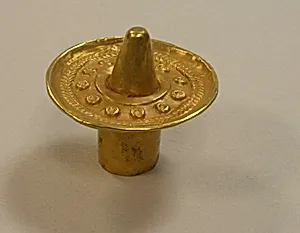
Ear Spool
Unknown Artist
450–1000 CE
Medium
Gold
Dimensions
a: Diam. 1 7/16 in. (3.7 cm) b: Diam. 1 7/16 in. (3.7 cm)
Classification
Metal-Ornaments
Culture
Greater Coclé
Department
Arts of Africa, Oceania, and the Americas
Museum
Metropolitan Museum of Art, New York, NY
Credit
The Michael C. Rockefeller Memorial Collection, Bequest of Nelson A. Rockefeller, 1979
Accession Number
1979.206.484a, b
Rights
Public Domain
Art Historical Context
This exquisite pair of gold ear sp hails from the Greater Cocl culture in ancient Panama, dating to 450–1000 CE. Crafted during the pre-Columbian, these ornaments—each with a diameter of 7/16 inches (3.7 cm)—were worn in pierced and stretched earlobes, a common practice among elites to display wealth and social standing. The Greater Coclé people, part of the vibrant Isthmian traditions in the Americas, were renowned for their sophisticated metalworking, transforming raw gold into symbols of power and prestige. Gold held profound cultural significance in these societies, often linked to the sun, divinity, and the afterlife. Artisans likely employed techniques like hammering, casting, or lost-wax methods to shape the spools, achieving a lustrous finish that caught the light during ceremonies or daily life. As body ornaments, they bridged personal adornment and ritual expression, reflecting a worldview where beauty and status intertwined. Today, these spools grace the Metropolitan Museum of Art's Arts of Africa, Oceania, and the Americas department, part of The Michael C. Rockefeller Memorial Collection. They invite us to marvel at the ingenuity of unnamed creators whose legacy endures in shimmering gold.