
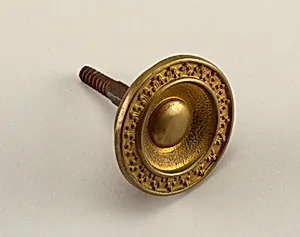
Knob
ca. 1795
Classification
metalwork
Department
Smithsonian Collection
Museum
Smithsonian American Art Museum
Credit
Smithsonian American Art Museum
Accession Number
1914-27-87
Rights
Public Domain
About this artwork
Research in Progress
Art Historical Context
Nestled in the Smithsonian American Art Museum's collection this intriguing *Knob* dates to around 1795, a time when the young United States was forging its identity in the Federal period following the Revolutionary War. Classified as metalwork, it the skilled craftsmanship of American artisans who transformed everyday functional objects into subtle expressions of elegance and utility. Though the exact medium and artist remain under research, such knobs—likely used on doors, furniture, or cabinets—were essential household fixtures, blending practicality with emerging neoclassical tastes inspired by European influences. In the late 18th century, metalwork flourished in America as workshops in cities like Philadelphia and New York produced durable pieces from cast or wrought metals, often featuring simple yet refined forms. This *Knob* offers a glimpse into domestic life, where even small hardware reflected growing prosperity and a desire for refined interiors. Its presence in the Smithsonian highlights how decorative arts preserve the unsung stories of anonymous makers. Ongoing research promises to uncover more about its origins, reminding us that museum treasures like this one continue to reveal layers of history. Visitors are invited to ponder: what door did it once turn?
About the Artist
Unknown
The artist designated as "Unknown" in our virtual museum's collection exemplifies a poignant chapter in art history: creators whose identities have faded into obscurity despite the enduring power of their work. With only one known artwork attributed to them in our holdings, this figure represents countless anonymous hands that shaped visual culture across centuries. Museums worldwide, including th...