
Earring
Unknown Artist
6th–10th century
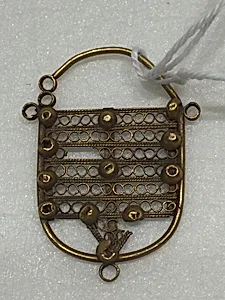
Medium
Gold; filligreed
Dimensions
H. 1 5/16 in. (3.3 cm) W. 1 in. (2.5 cm) D. 1/8 in. (0.3 cm) Wt. 0.1 oz. (2 g)
Classification
Jewelry
Department
Islamic Art
Museum
Metropolitan Museum of Art, New York, NY
Credit
Purchase, 1895
Accession Number
95.16.1
Rights
Public Domain
Tags
Art Historical Context
This exquisite gold filigree earring, crafted by an unknown artist between the th and 10th centuries, the masterful metalworking traditions of early Islamic art. Measuring just 1 5/16 inches high weighing a mere 0.1 ounces, its delicate form showcases filigree—a technique where fine gold wires twisted into intricate, openwork patterns and meticulously soldered onto a backing. This labor-intensive method created lightweight yet ornate jewelry that caught the light beautifully, highlighting the artisan's skill in balancing fragility and durability. Dating to the formative centuries of Islam, when the faith spread across the Middle East, North Africa, and beyond, this earring reflects cultural exchanges with Byzantine and Sasanian predecessors. In Islamic societies, such adornments were prized symbols of wealth and status, often worn by women (and sometimes men) during celebrations or daily life. Earrings like this one were not merely decorative but carried social significance, underscoring personal identity and craftsmanship in a burgeoning golden age of Islamic artistry. Acquired by the Metropolitan Museum of Art in 1895, this tiny treasure offers a glimpse into everyday elegance from over a millennium ago, reminding us how even small objects can illuminate vast historical narratives.