
Earthenware Lantern
Unknown Artist
9th–10th century
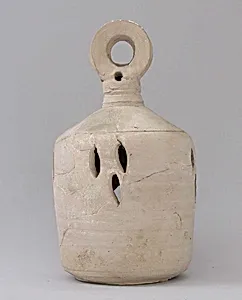
Medium
Earthenware; slip covered, unglazed
Dimensions
H. 7 7/8 in. (20 cm) Diam. 4 5/16 in. (11 cm)
Classification
Ceramics
Department
Islamic Art
Museum
Metropolitan Museum of Art, New York, NY
Credit
Rogers Fund, 1940
Accession Number
40.170.296
Rights
Public Domain
Art Historical Context
Step into the luminous world of 9th–10th century Islamic artistry with this delicate earthenware lantern, a modest yet evocative survivor from the Abbasid era's cultural flourishing. Crafted by an unknown artisan, this small vessel—standing just under 8 inches tall and 4 inches wide—was designed to house an oil lamp, casting a warm, patterned glow in homes, mosques, or palaces across the Islamic world. Its presence in the Metropolitan Museum of Art's Islamic Art collection, acquired through the Rogers Fund in 1940, highlights everyday objects that embodied profound craftsmanship. The lantern's medium is unglazed earthenware coated with slip—a liquid clay suspension applied to create a refined surface for subtle decoration or texture. This technique, prevalent before the widespread adoption of glazes in later Islamic ceramics, prioritized functionality and affordability while allowing light to filter through intricately pierced openings (typical of such forms). Unglazed finishes preserved the raw, earthy warmth of the clay, making it durable for daily use yet artistically refined. Culturally, this lantern reflects the Islamic emphasis on beauty in utility, blending practicality with spiritual ambiance. Imagine it illuminating evening prayers or intimate gatherings, a testament to the era's innovative pottery traditions from regions like Iraq or Iran. A quiet gem, it invites us to appreciate the unsung makers who lit up medieval lives.