
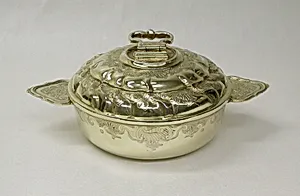
Écuelle
ca. 1743–45
Medium
Silver gilt
Dimensions
Overall: H. 3 1/16 x W. 8 x D. 5 1/4 in. (7.8 x 20.3 x 13.3 cm)
Classification
Metalwork-Silver
Culture
German, Augsburg
Department
European Sculpture and Decorative Arts
Museum
Metropolitan Museum of Art, New York, NY
Credit
Purchase, Anna-Maria and Stephen Kellen Foundation Gift, in memory of Stephen M. Kellen, 2005
Accession Number
2005.364.20a, b
Rights
Public Domain
Art Historical Context
Step into the lavish world of 18th German silvercraft with *Écuelle*, a silver gilt bowl crafted by Abraham Drentett IV around 1743–45. Hailing from Augsburg, a renowned hub for metalwork in Europe, this-handled porringer—measuring just 3 1/16 inches high elegantly proportioned at 8 by 5 1/4 inches—ed as a luxurious vessel for soups, porridges, or even hot chocolate among the elite. The Drentwett family, spanning generations of master silversmiths, was celebrated for their intricate designs, and Abraham IV upheld this legacy during the Rococo era, blending opulence with refined asymmetry. Silver gilt, achieved by applying a thin layer of gold over silver, not only enhanced durability and shine but symbolized wealth and status in Baroque-influenced courts. Augsburg's guilds fostered technical virtuosity, from chasing and repoussé to enamel accents, making pieces like this *Écuelle* prized collector's items. Its compact form reflects the period's shift toward intimate, decorative tableware amid growing bourgeois refinement. Today, this gem graces the Metropolitan Museum of Art's European Sculpture and Decorative Arts department, acquired in 2005 through the Anna-Maria and Stephen Kellen Foundation. It whispers of Enlightenment-era indulgence, inviting us to appreciate the silversmith's artistry in everyday luxury.