
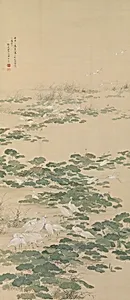
山本梅逸筆 蓮池白鷺図|Egrets in a Lotus Pond
1852
Medium
Hanging scroll; ink and color on silk
Dimensions
Image: 50 × 21 13/16 in. (127 × 55.4 cm) Overall with mounting: 84 × 27 9/16 in. (213.4 × 70 cm) Overall with knobs: 84 × 30 in. (213.4 × 76.2 cm)
Classification
Paintings
Culture & Period
Japan · Edo period (1615–1868)
Department
Asian Art
Museum
Metropolitan Museum of Art, New York, NY
Credit
Fishbein-Bender Collection, Gift of T. Richard Fishbein and Estelle P. Bender, 2015
Accession Number
2015.760
Rights
Public Domain
Tags
Art Historical Context
**Egrets in a Lotus** (1852), a delicate hanging scroll by Japanese artist Yamamoto Baiitsu, captures the serene beauty of nature during Japan's Edo period (1615–1868). Created in ink and color on silk this work measures an impressive 50 × 13/16 inches the image alone, designed to unroll dramatically for display in a traditional Japanese home or temple. Baiitsu, active in the late Edo era, evokes the tranquility of a lotus pond alive with elegant white egrets perched among broad leaves, a timeless motif symbolizing purity and harmony in East Asian art. Hanging scrolls like this were prized possessions, often cherished by literati and collectors for meditation and seasonal appreciation. The use of ink and subtle colors on silk allowed for fluid brushwork that brings the birds' graceful forms and the pond's reflective stillness to life, highlighting the Edo period's refined aesthetic amid Japan's isolationist sakoku policy. Part of the Metropolitan Museum of Art's Asian Art collection, gifted from the Fishbein-Bender Collection in 2015, this piece invites visitors to ponder the delicate balance of nature and artistry in pre-modern Japan.
About the Artist
Yamamoto Baiitsu · 1783–1856
Yamamoto Baiitsu (1783–1856) was a leading literati painter of late Edo-period Japan, celebrated for his refined bird-and-flower compositions and evocative landscapes. Born in Nagoya in the Owari domain to a sculptor's family, he was the son of Yamamoto Yumigiemon, an artisan who served the Tokugawa lords of the Owari clan. Baiitsu received early training under local masters, studying bird-and-flo...