Ctrl K
1783–1856
Occupations
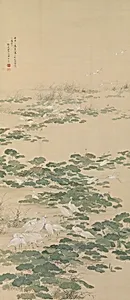
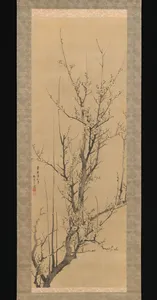
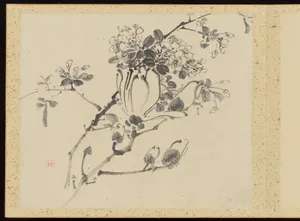
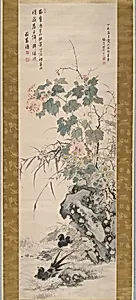
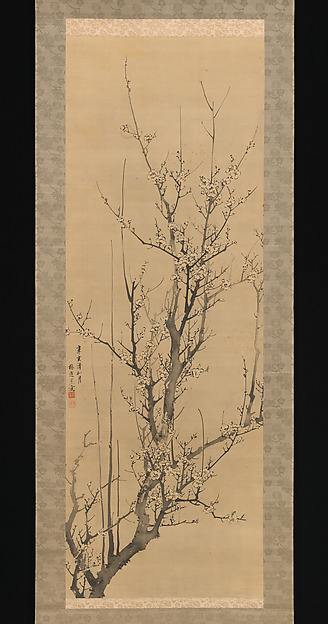
Yamamoto Baiitsu (1783–1856) was a leading literati painter of late Edo-period Japan, celebrated for his refined bird-and-flower compositions and evocative landscapes. Born in Nagoya in the Owari domain to a sculptor's family, he was the son of Yamamoto Yumigiemon, an artisan who served the Tokugawa lords of the Owari clan. Baiitsu received early training under local masters, studying bird-and-flower painting with Yamada Kyūjō, Shijō-school techniques with Chō Gesshō, and Kano-school methods with Yamamoto Rantei. A pivotal patron, the wealthy merchant Kamiya Tenyū, granted him access to rare Chinese paintings and texts, fostering his deep engagement with literati (Nanga or Bunjinga) traditions.
Following Tenyū's death in 1802, Baiitsu traveled widely across Japan, forging close ties with fellow artists like Nakabayashi Chikuto in Kyoto and Edo (modern Tokyo), where he absorbed influences from literati scholars. By 1833, he had risen to become an official painter for the Owari clan, solidifying his status in Nagoya's art scene. Working in the Maruyama-Shijō school tradition while embracing Nanga freedom, Baiitsu mastered polychrome elegance in bird-and-flower subjects and the "boneless" technique for fluid, moody ink landscapes that often featured sage-like self-portraits amid nature.
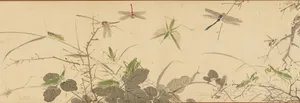
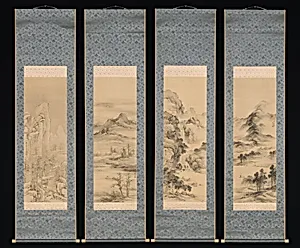
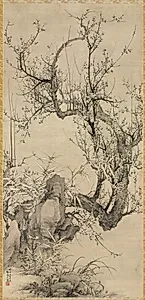
Among his major works are *Landscapes of the Four Seasons* (1848, four hanging scrolls, Metropolitan Museum of Art), which unite seasonal moods from an elevated vista; *Bamboo and Rock* (1848, Philadelphia Museum of Art), balancing lush ink leaves against jagged dry-brush stone; and *Flowers and Insects* (1836, Nomura Art Museum). Other acclaimed pieces include *Birds and Flowers of the Four Seasons* (1847) and *Prunus in the Moonlight* (Detroit Institute of Arts).
Baiitsu's legacy endures as a bridge between orthodox Japanese schools and Chinese-inspired literati painting, with his works held in prestigious collections worldwide, including the British Museum, Cleveland Museum of Art, and Asian Art Museum (San Francisco). Two of his paintings are designated Important Cultural Properties in Japan, affirming his mastery and influence on Nagoya's Owari Nanga tradition.
Wikidata (CC0); Getty ULAN (ODC-By)
All 14 artworks loaded