
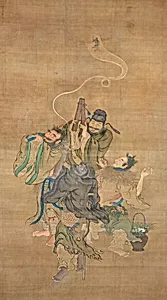
八仙図|Eight Daoist Immortals Welcoming Jurōjin
Unknown Artist
17th century
Medium
Hanging scroll; ink and color on silk
Dimensions
Image: 55 × 31 in. (139.7 × 78.7 cm) Overall with mounting: 93 1/2 × 36 5/8 in. (237.5 × 93 cm) Overall with knobs: 93 1/2 × 39 5/8 in. (237.5 × 100.6 cm)
Classification
Paintings
Culture & Period
Japan · Edo period (1615–1868)
Department
Asian Art
Museum
Metropolitan Museum of Art, New York, NY
Credit
Charles Stewart Smith Collection, Gift of Mrs. Charles Stewart Smith, Charles Stewart Smith Jr., and Howard Caswell Smith, in memory of Charles Stewart Smith, 1914
Accession Number
14.76.53
Rights
Public Domain
Tags
Art Historical Context
This exquisite hanging scroll, *Eight Daoist Immort Welcoming Jurōjin dates to Japan's Edo period (1615–8), a time of flourishing and artistic refinement. Created by an unknown artist using ink and color on silk it measures an impressive 55 ×31 inches in its image alone, designed to unroll dramatically for display in homes or temples during or auspicious occasions. The composition captures the Eight Dao Immortals—legendary figures from Chinese Dao, revered in Japan for wisdom, longevity, and powers—joyfully greeting Jurōjin, one of Seven Lucky Gods (Shifukujin), often shown with his deer companion symbolizing eternal life. Daoism profoundly influenced Japanese art and spirituality, blending with native Shinto beliefs to inspire themes of immortality and harmony with nature. During the Edo era, such paintings reflected a popular fascination with auspicious motifs amid urban prosperity, serving as talismans for good fortune. The silk medium allowed for luminous colors and fluid ink lines, typical of traditional East Asian techniques that emphasize balance, flowing robes, and ethereal figures against misty landscapes. Now part of the Metropolitan Museum of Art's Asian Art collection, gifted in 1914 from the Charles Stewart Smith family, this scroll invites viewers to ponder timeless ideals of longevity and celestial welcome, bridging Chinese mythology and Japanese aesthetics in a vibrant celebration of the divine.