
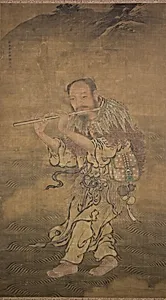
明 劉俊 韓湘子圖 軸|The Daoist Immortal Han Xiangzi
undated, late 15th–early 16th century
Medium
Framed hanging scroll; ink and color on silk
Dimensions
Image: 48 in. × 26 3/4 in. (121.9 × 67.9 cm) Framed: 62 1/4 × 39 in. (158.1 × 99.1 cm)
Classification
Paintings
Culture & Period
China · Ming dynasty (1368–1644)
Department
Asian Art
Museum
Metropolitan Museum of Art, New York, NY
Credit
Purchase, Oscar L. Tang Fund for Asian Art; The Miriam and Ira D. Wallach Foundation, Seymour, and The B. Y. Lam Funds; Brooke Russell Astor Bequest; The Vincent Astor Foundation, several members of The Chairman's Council, The DeBevoise Calello Family Fund, Ernest Erickson Foundation, Barbara and William Karatz, J. J. Lally & Co., Eric Schmidt, Miriam and Ira D. Wallach Foundation, and Charlotte C. Weber Gifts; Gifts of Mrs. Edward Brayton and Robert H. Ellsworth, by exchange; and funds from various donors, 2016
Accession Number
2016.238
Rights
Public Domain
Tags
Art Historical Context
This striking hanging scroll by the Ming dynasty painter Liu Jun portrays Han Xiangzi, one of the legendary Eight Immortals of Daoism. Dressed in flowing robes, the youthful immortal is shown playing a flute, his instrument symbolizing harmony with nature and the pursuit of spiritual transcendence. Created in the late 15th or early 16th century, the work captures a moment of quiet enchantment, inviting viewers to contemplate themes of immortality and the transformative power of music. Liu Jun specialized in figure paintings that blended vivid storytelling with refined brushwork. Working on silk with ink and delicate mineral colors, he achieved luminous effects that highlight the figure’s expressive gestures and the subtle textures of his garments. The vertical scroll format, traditional in Chinese art, encourages a contemplative viewing experience, drawing the eye upward in harmony with the immortal’s elevated state. As a Ming dynasty masterpiece now in the Metropolitan Museum of Art’s collection, this painting reflects the era’s deep fascination with Daoist lore and the ideal of the cultured recluse. It offers modern audiences a vivid glimpse into China’s rich tradition of immortal imagery and the enduring appeal of art that bridges the earthly and the divine.