
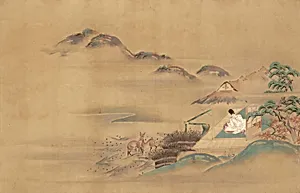
石山師香筆 源氏物語八景 絵巻|Eight Views from The Tale of Genji
Medium
Handscroll; ink, color, and gold on silk
Dimensions
Image: 13 in. × 25 ft. (33 × 762 cm) Overall with mounting: 14 in. (35.6 cm)
Classification
Paintings
Culture & Period
Japan · Edo period (1615–1868)
Department
Asian Art
Museum
Metropolitan Museum of Art, New York, NY
Credit
Mary Griggs Burke Collection, Gift of the Mary and Jackson Burke Foundation, 2015
Accession Number
2015.300.44
Rights
Public Domain
Tags
Art Historical Context
Behold the exquisite handscroll *Eight Views from The Tale of Genji* by Ishiyama Moroka, a captivating Edo-period (1615–1868) masterpiece in the Metropolitan Museum of Art's Asian Art collection. Crafted on silk with ink, color, and gold, this 25-foot-long scroll unfolds like a narrative ribbon, inviting viewers to unroll its scenes of elegant landscapes, poised men, and graceful deer. Measuring just 13 inches high, its intimate scale belies the epic scope of Japan's most beloved literary classic. *The Tale of Genji*, penned by Murasaki Shikibu around 1008, is often hailed as the world's first novel, chronicling the romantic intrigues and poetic melancholy of Heian court life. During the Edo era, artists like Moroka revived these timeless stories amid a flourishing ukiyo-e tradition, blending refined Yamato-e painting styles with gold-flecked opulence to evoke nostalgia and beauty. This work captures eight iconic vignettes, transporting us to misty mountains and serene gardens. The handscroll format, a hallmark of Japanese emakimono, encouraged slow, meditative viewing—much like reading Genji itself. Moroka's masterful use of mineral pigments and gold enhances the dreamlike quality, making landscapes shimmer and figures exude quiet emotion. A gift from the Mary Griggs Burke Collection, it exemplifies the enduring cultural reverence for Genji's world in Japanese art. (198 words)