
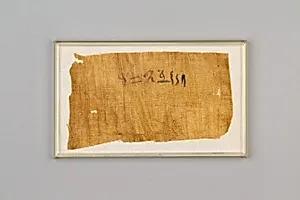
Embalmers' Dockets
Unknown Artist
ca. 1479–1458 B.C.
Medium
Linen, ink
Dimensions
L. 16 cm (6 5/16 in.); W. 9 cm (3 9/16 in.) Framed: L. 19.7 cm (7 3/4 in.); W. 12.1 cm (4 3/4 in.)
Classification
Linen Mark, embalmer's docket
Period
New Kingdom
Department
Egyptian Art
Museum
Metropolitan Museum of Art, New York, NY
Credit
Rogers Fund, 1936
Accession Number
36.3.181
Rights
Public Domain
Art Historical Context
Step into the mysterious world of ancient Egyptian mummification with *Embalmers' D*, a trio of small linen labels from the New Kingdom's Dynasty 18 (ca. 1479–1458 B.C.). Created by an unknown artist, these modest artifacts—measuring just 16 by 9 cm—were tools used by embalmers at Deir el-Bahri near Thebes. Inked with hieratic script, they recorded essential details like names of the deceased,almers, and processing dates, ensuring meticulous organization during the sacred rite of preserving bodies for the afterlife. Dating to the height of Egypt's imperial power under pharaohs like Hatshepsut and Thutmose III, these dockets offer a rare glimpse into the daily operations of the embalming industry—a cornerstone of Egyptian belief in immortality. Unlike grand tomb art, their utilitarian ink on linen highlights the blend of artistry and administration in religious practice, revealing how even death was bureaucratically managed. Housed in the Metropolitan Museum of Art's Egyptian Art department (Rogers Fund, 1936), these fragile survivors underscore the ingenuity of New Kingdom craftsmen, transforming everyday cloth into eternal records of human ritual. A testament to a civilization obsessed with eternity, they invite us to ponder the embalmers' skilled hands bridging life and the divine.