
Embalmers' Dockets
Unknown Artist
ca. 1479–1458 B.C.
Medium
Linen, ink
Dimensions
L. 16.5 cm (6 1/2 in.); W. 9.5 cm (3 3/4 in.) Framed: 19.7 cm (7 3/4 in.); W. 12.1 cm (4 3/4 in.)
Classification
Linen Mark, embalmer's docket
Period
New Kingdom
Department
Egyptian Art
Museum
Metropolitan Museum of Art, New York, NY
Credit
Rogers Fund, 1936
Accession Number
36.3.182
Rights
Public Domain
Art Historical Context
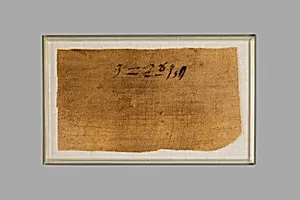
Step into the intriguing world of ancient Egyptian funerary practices with *Embalmers' Dockets*, a small yet revealing artifact from the New Kingdom's Dynasty 18 (ca. 1479–1458 B.C.). This delicate piece of linen, inscribed with ink in hieratic script, served as a practical label used by embalmers. Measuring just 16.5 cm by 9.5 cm, it likely recorded essential details such as the name of the deceased, the date of embalming, or the duration of the mummification process—vital administrative notes in a culture obsessed with eternal life. Crafted during a golden age of Egyptian art and empire under pharaohs like Hatshepsut and Thutmose III, the docket highlights the meticulous craftsmanship of embalmers, who transformed linen—a common wrapping material—into a functional writing surface. The use of ink on fabric underscores the blend of artistry and utility in daily rituals, offering a rare glimpse into the "embalming workshops" where bodies were prepared for the afterlife over a standard 70-day period. Today, housed in the Metropolitan Museum of Art's Egyptian Art department (acquired via the Rogers Fund in 1936), this unassuming object illuminates the bureaucratic side of death in ancient Egypt. It reminds us how even the smallest artifacts can unpack profound cultural beliefs in immortality, making the mysteries of mummification feel remarkably human and organized.