
Embroidery sample for a man’s suit
Unknown Artist
1800–1815
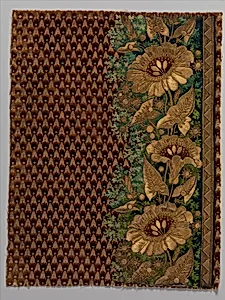
Medium
Silk, metal and chenille thread on silk velvet
Dimensions
L. 13 1/2 x W. 10 1/4 inches (34.3 x 26 cm)
Classification
Textiles-Embroidered
Culture
French
Department
European Sculpture and Decorative Arts
Museum
Metropolitan Museum of Art, New York, NY
Credit
Gift of The United Piece Dye Works, 1936
Accession Number
36.90.14
Rights
Public Domain
Tags
Art Historical Context
This exquisite embroidery sample, created in France between 1800 and1815, offers a glimpse into the opulent world of early 19th-century men's during the Napoleonic Empire and early Restoration periods. Designed as a prototype for a gentleman’s suit, this small swatch (13½ x 10¼ inches) showcases the lavish detailing that distinguished elite tailoring of the era, where embroidered motifs elevated everyday garments into statements of status and refinement. Crafted from silk, metal, and chenille threads on a rich silk velvet ground, the piece highlights masterful embroidery techniques. The chenille threads provide a plush, velvety texture, while metallic strands catch the light for dramatic shimmer—perfect for formal coats or waistcoats. Floral designs, a hallmark tag of this work, reflect the neoclassical love of nature-inspired motifs, blending botanical elegance with the era’s bold, imperial aesthetics. As a textile artifact in the Metropolitan Museum of Art’s European Sculpture and Decorative Arts collection (gift of The United Piece Dye Works, 1936), it underscores the artistry of anonymous French embroiderers and the cultural prestige of luxury fabrics. Such samples were essential tools for tailors, preserving patterns that symbolized France’s enduring influence on global fashion.