
Epitaph des Jodok Hauser
1478/1479
Medium
Malerei auf Tannenholz (Rahmen original)
Dimensions
166,5 × 75 cm
Classification
Tafelbild
Department
Belvedere Collection
Museum
Belvedere
Credit
Belvedere, Vienna
Accession Number
4850
Rights
Public Domain
About this artwork
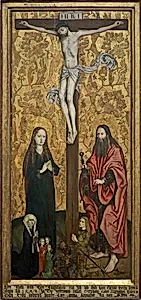
Wie der Inschrift auf dem Originalrahmen zu entnehmen ist, wurde diese Darstellung der Kreuzigung Christi vom 1478 verstorbenen Ritter Jodok Hauser gestiftet. Hauser ist am unteren Bildrand mit seiner Ehefrau und seinen drei Kindern verewigt. Das Gemälde, für dessen Ausführung der Maler Hans Siebenbürger im Jahr 1479 entlohnt wurde, sollte als Gedächtnisbild das Andenken an den Verstorbenen aufrechterhalten. Nach den spätmittelalterlichen Glaubensvorstellungen waren Gebete und Fürbitten geeignet...
Art Historical Context
**Epitaph des Jodok Hauser** (1478/1479) by Hans Siebenbger is a poignant late medieval panel painting on fir wood, housed in its original frame. Measuring 166.5 × 75 cm, this work from the Belvedere Collection in Vienna depicts the Crucifixion of Christ, the knight Jodok Hauser—or and subject—portrayed at the lower edge alongside his wife and three children Commissioned as a memorial following Hauser's death in 1478 and completed in 1479 (as recorded in payment documents), it served as an epitaph to preserve his memory in a church setting. In the religious worldview of the late Middle Ages, such donor portraits were more than artistic commissions; they were acts of devotion. Prayers and intercessions before the image were believed to hasten souls from purgatory to heaven, reflecting the era's intense focus on salvation and the afterlife. Siebenbürger's straightforward, devotional style captures this solemn purpose, blending sacred narrative with personal legacy in a format typical of Northern European panel paintings. This epitaph offers a window into 15th-century piety and family devotion, reminding us how art bridged the living and the dead. Visitors can appreciate its enduring role in commemorating everyday nobility amid divine drama.